
Over the past few years, many of us have found ourselves spending more time at home—working remotely, studying online, and practicing social distancing. While staying home keeps us safe, it also changes our daily routine in ways that can affect our health. Suddenly, we’re less active, sitting longer hours, reaching for snacks from the fridge or pantry, and dealing with stress, anxiety, or even loneliness.
This shift can lead to unwanted weight gain, which may increase the risk of health issues like type 2 diabetes, high blood pressure, heart disease, and more if not managed. But here’s the good news: even in these circumstances, you can take steps to protect your health and well-being.
That’s why I’d like to share some healthy lifestyle tips for beginners that will help you maintain your body weight, boost your energy, and support your mental health while staying home or adjusting to new routines. These tips are easy, beginner-friendly, and designed to fit into everyday life.
1. Stay Physically Active

Spending hours at home often means more sitting—whether it’s for work, classes, or Netflix binges. But too much sitting can harm your body in the long run. Exercise doesn’t mean you need fancy equipment or a gym membership.
Beginner ideas:
- Go for a 20–30 minute walk around your home or neighborhood.
- Try beginner-friendly YouTube workouts, yoga, or stretching.
- Take short breaks every hour to stand up, stretch, or walk around.
Movement keeps your muscles strong, boosts your mood, and helps manage your weight.
2. Watch What You Eat (But Don’t Be Too Strict)
Being at home often means easy access to snacks. Emotional eating is also common when we feel stressed or bored. While it’s okay to treat yourself, balance is key.
Beginner tips:
- Plan your meals ahead to avoid mindless snacking.
- Choose whole foods—fruits, vegetables, lean proteins, and whole grains.
- Limit processed foods and sugary drinks, but don’t deprive yourself completely.
Remember: it’s not about dieting, it’s about nourishing your body.
3. Stay Hydrated
It’s easy to forget water when you’re at home all day, but hydration plays a huge role in your health. Sometimes what feels like hunger is actually thirst.
Quick tip: keep a water bottle at your desk or nearby as a reminder. Aim for 6–8 glasses a day. Add lemon, cucumber, or mint if you want some flavor.
4. Prioritize Your Mental Health
Social isolation, uncertainty, and stress can take a toll on mental health. Taking care of your mind is just as important as taking care of your body.
Simple practices:
- Practice deep breathing or meditation for 5–10 minutes daily.
- Write your thoughts in a journal to release stress.
- Stay connected with friends and family through calls or video chats.
- Step outside for fresh air and sunlight whenever possible.
A calm mind supports a healthy body.
You may also like to read these posts:
Stress Management Techniques That Work In Daily Life
Mental Health Self-Care Strategies | Wellness Tips 2025
Nutrition Tips For Daily Wellness | Stay Healthy Daily
Easy Fitness Routines At Home | Simple Daily Workouts
5. Get Enough Sleep
When your routine changes, sleep patterns often do too. Staying up late and waking up tired can affect your mood, energy, and even your weight.
Beginner tips for better sleep:
- Aim for 7–8 hours each night.
- Go to bed and wake up at the same time daily.
- Turn off screens at least 30 minutes before bedtime.
- Create a relaxing routine—like reading or listening to soft music.
Good sleep helps your body recover, improves focus, and strengthens immunity.
6. Manage Stress Without Food
During stressful times, many of us turn to food for comfort. While it feels good in the moment, it often leads to overeating. Instead, try healthier ways to manage stress.
Ideas to try:
- Stretch or do light yoga.
- Take a walk outdoors.
- Listen to music or podcasts.
- Pick up a hobby like painting, reading, or gardening.
Stress management is a powerful tool for overall well-being.
7. Start Small, Stay Consistent
One of the most important healthy lifestyle tips for beginners is to take small steps. You don’t need to change everything overnight. Pick one or two habits to start with—like drinking more water and going for a daily walk. Once they become part of your routine, add more.
It’s about progress, not perfection.
8. Limit Screen Time

Spending hours on laptops, phones, or TV may be unavoidable, especially if you work or study from home. But too much screen time can strain your eyes, disturb your sleep, and make you more sedentary.
Beginner tips:
- Follow the 20-20-20 rule: every 20 minutes, look at something 20 feet away for 20 seconds.
- Set screen-free times, especially before bed.
- Replace one hour of scrolling with reading, journaling, or going for a walk.
9. Practice Portion Control
You don’t need to cut out all your favorite foods, but watching portion sizes can help prevent overeating.
Try this:
- Use smaller plates to naturally reduce portion sizes.
- Eat slowly and stop when you’re 80% full.
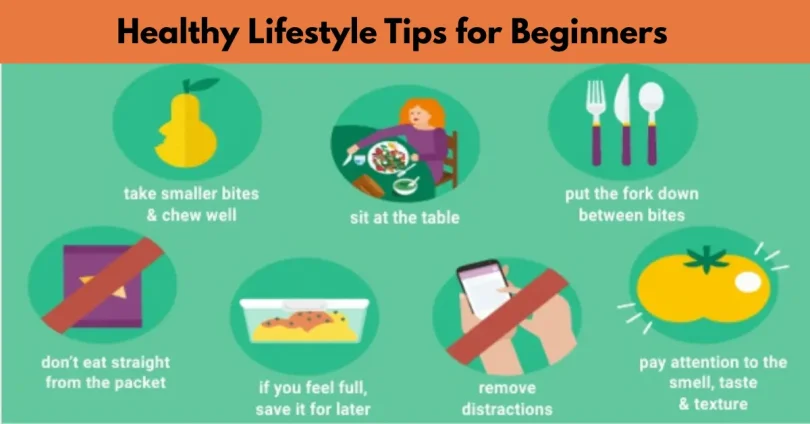
- Avoid eating straight from the bag—serve snacks in a bowl.
This way, you can enjoy your meals without guilt.
10. Add More Protein to Your Diet
Protein isn’t just for athletes—it’s essential for everyone. It helps keep you full, supports muscle health, and provides lasting energy.
Beginner-friendly options:
- Eggs, yogurt, beans, or lentils.
- Lean meats like chicken or fish.
- Nuts and seeds as quick snacks.
11. Create a Daily Routine
A healthy lifestyle thrives on structure. Without a routine, it’s easy to fall into late nights, skipped meals, or inactivity.
How to build one:
- Set fixed times for meals, sleep, and work.
- Schedule short breaks to stretch or move.
- Add one “self-care” activity daily, like reading or meditation.
12. Practice Mindful Eating
Most of us eat while scrolling, watching TV, or working—but this often leads to overeating. Mindful eating helps you enjoy food while paying attention to your body’s hunger signals.
How to do it:
- Eat slowly and chew thoroughly.
- Notice flavors, textures, and smells of your food.
- Put your fork down between bites.
13. Stay Socially Connected
Even if you can’t meet in person, staying connected with loved ones is vital for emotional health. Loneliness can lead to stress and unhealthy habits, so nurturing relationships is part of a healthy lifestyle.
Ideas:
- Schedule weekly calls or video chats.
- Join online communities with shared interests.
- Reach out to a friend when you’re feeling down.
14. Track Your Progress
One of the best ways to stay motivated is to see how far you’ve come. Tracking doesn’t need to be complicated—just a simple notebook or an app can do wonders.
Things you can track:
- Daily water intake.
- Steps or minutes of exercise.
- Sleep hours.
- Mood or stress levels.
Over time, these small records will show you the positive changes in your lifestyle.
15. Be Kind to Yourself
Last but definitely not least—remember to be gentle with yourself. Building a healthy lifestyle is a journey, and slip-ups are part of it. Instead of being hard on yourself, celebrate small wins and focus on long-term progress.
FAQs
1. What is the first step to living a healthy lifestyle?
The very first step is starting small. Pick one habit that feels manageable, like drinking more water or walking 15 minutes daily. Once it becomes part of your routine, add another habit. Small steps are easier to stick with than big, sudden changes.
2. How can I stay motivated as a beginner?
Motivation comes and goes, so what matters most is consistency. Try setting small goals, tracking your progress, or working out with a friend. Celebrate your little wins—even drinking an extra glass of water counts! Over time, these habits will feel natural.
3. Do I need to follow a strict diet to be healthy?
No, you don’t. Strict diets are hard to maintain and can make you feel deprived. Instead, focus on eating balanced meals with fruits, vegetables, lean proteins, and whole grains. And yes, it’s okay to enjoy your favorite foods in moderation.
4. How much exercise should beginners do?
If you’re just starting out, even 15–30 minutes of activity a day can make a big difference. That could be walking, stretching, light yoga, or dancing. As your stamina improves, you can increase your activity gradually.
5. How does stress affect my health?
Stress can lead to overeating, poor sleep, low energy, and even long-term health problems if ignored. Learning to manage stress through meditation, deep breathing, journaling, or hobbies helps protect both your mind and body.
Final Thoughts
Living a healthy lifestyle doesn’t mean making drastic changes overnight—it’s about small, consistent steps that improve your body and mind over time. From staying active and eating balanced meals to managing stress, sleeping well, and building positive routines, these simple healthy lifestyle tips for beginners can help you feel stronger, happier, and more in control of your well-being. Remember, progress matters more than perfection. Start today, stay consistent, and let every little change lead you toward a healthier future.